300 Human Emotions
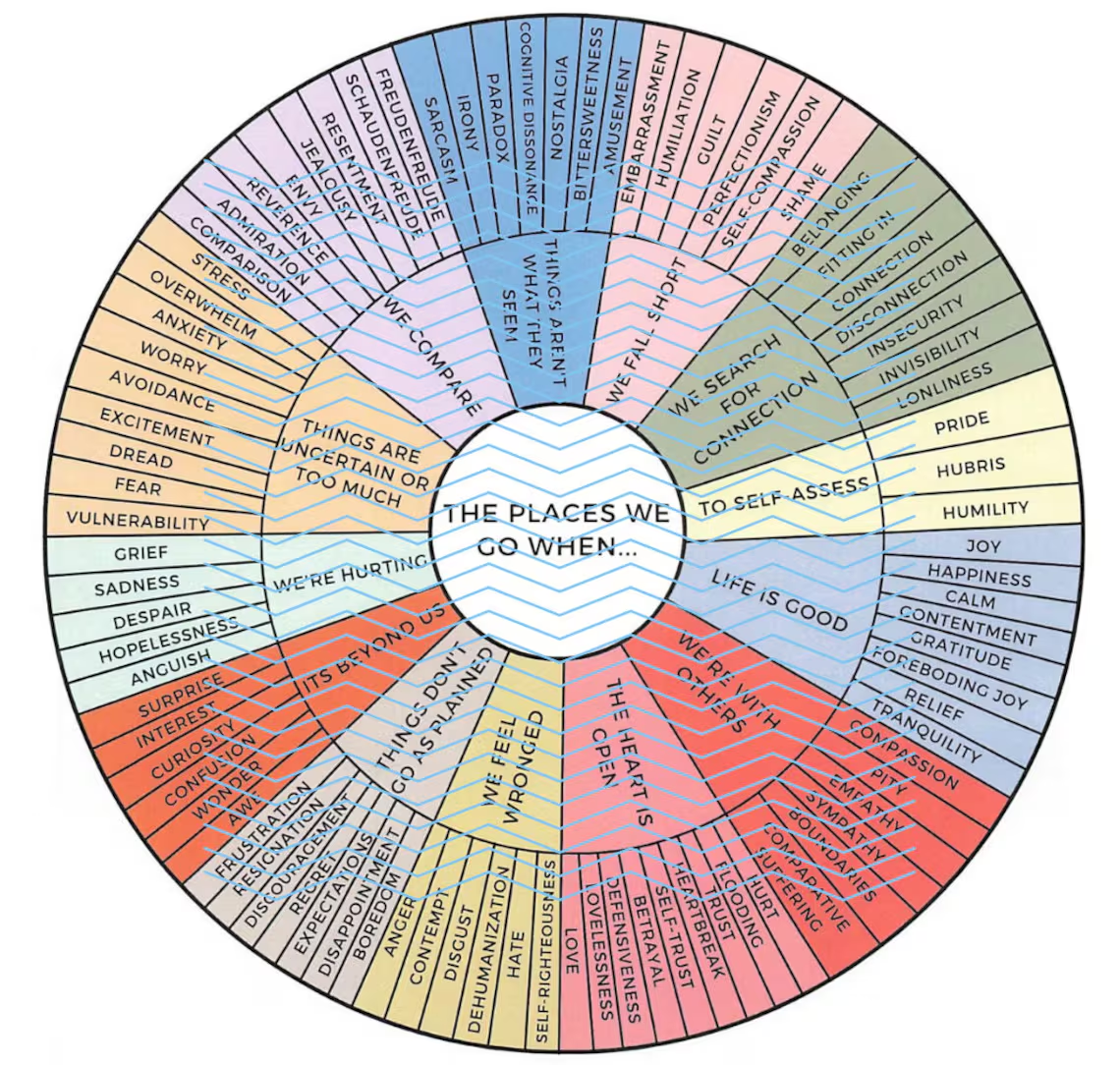
This is a pretty comprehensive list of all the words that humans have used to describe our complex human emotions.
Fundamentally there are only 7 main emotions shown in the middle of this wheel, but they then expand out into more nuanced expressions, and as the lists below show - there are combinations of words from all around the world that provide even more nuance (and potentially a sense of the culture itself)
My intention with this is to use it for both Deprojection Narrative Workflow & the Deprojection Audio Workflow essentially choosing an emotion to focus on expressing through AV Composition.
It could be a strong practice for daily 04. EXPRESSION and will be something that the machines can't understand at least for a while. It also provides a good feed for 05. TRANSMISSION as human emotions are also something that connects us outside of language barriers. We both know what it feels to like to be fearful, and when you look the tertiary level that then connects you more deeply with another as feeling insignificant or worthless is not common for all, neither is feeling persecuted or excluded.

or
or

Positive Emotions
Positive emotions are pleasant or desirable states. When we think of positive emotions, we often think of happiness. But positive emotions include so much more than that. They range from high-energy emotions like excitement to low-energy positive emotions like calmness. The extent to which we find these emotional states pleasurable depends on us. Some of us prefer excitement to calmness and some of us prefer the opposite. And some have suggested that there are genetic underpinnings to these preferences (e.g., the COMT gene).
Here is a list of some of the most common positive emotions:
- happiness
- excitement
- calmness
- contentment
- love
- pride
- acceptance
Negative Emotions
Negative emotions are unpleasant or undesirable states. But, just because they are unpleasurable doesn't mean they are unhelpful. Negative emotions help us do important things in our lives. For example, fear helps us escape from a tiger, anger helps us stand up for our own needs, and sadness helps us take a step back or seek social support. We need negative emotions just as much as we need positive emotions. When it comes to our well-being, we just need to learn how to regulate emotions in effective ways.
Here is a list of some of the most common negative emotions:
- anger
- sadness
- fear
- guilt
- shame
- regret
- grief
- embarrassment
- hatred
- jealousy
Emotions & Definitions (According to Basic / Discrete Emotion Theory)
There are a few theories of emotion that help organize different emotions and help us understand how they relate to each other. The most well-known of these theories is the discrete (or basic) theory of emotion. This was the theory used in the movie Inside Out. The basic premise is that emotions are separate, discrete things and that they are basic because they originate from having to deal with fundamental life tasks like running away from a predator (Ekman, 1999).
Enjoyment
Enjoyment is thought to be the only basic positive emotion. It may include other positive emotional experiences such as:
- pleasure
- joy
- happiness
- amusement
- pride
- aweAwe
- excitement
- ecstasy
Sadness
Sadness is a low-activation (low-energy) negative emotion that we often feel in response to things like rejection or loss. A list of sadness related emotions include:
- lonely
- unhappy
- hopeless
- gloomy
- miserable
Fear
Fear is a high-activation, avoidance-motivated negative emotion that we tend to feel in response to threats. Here's a fear-related emotion list:
- worried
- nervous
- anxious
- scared
- panicked
- stressed
Anger
Like fear, anger is a high-activation negative emotion. But unlike fear, it is an approach-motivated emotion. When we feel anger we want to approach the object of our anger rather than run away from it. Here is a list of anger-related emotions:
- annoyed
- frustrated
- bitter
- infuriated
- mad
- insulted
- vengeful
Disgust
Disgust is an avoidance-motivated emotion. There is something that we don't want to be around or experience, and we desire to move away. Here are some disgust-related words:
- dislike
- revulsion
- nauseated
- aversion
- offended
- horrified
Emotions (According to the Circumplex Emotion Theory)
Although the basic theory of emotion makes some sense, others have argued that emotions are not discrete things. They don't have specific locations in the brain, they almost always co-occur with each other, and there are many blends of emotions. Reasons like these led psychologists to develop the Emotion Circumplex Model (Russell, 1980).
This model suggests that emotions can be mapped in a circle. These are two axes: one axis is from high to low energy; the other axis is from high to low pleasure. Early researchers believed any emotion could be mapped on this circle. However, more recent research has suggested that there may be more than two dimensions required to understand and map emotions. For example, one study suggested that mapping emotions on how controllable and useful they are is helpful. Plus, this adds two additional dimensions (Trnka et al., 2016). Basically, the only thing we really know for certain about emotions is that they are complex.
Here is a list of emotions from the Emotion Circumplex Model:
High-energy positive emotions:
- excited
- delighted
- astonished
Low-energy positive emotions: - pleased
- contentment
- relaxed
- calm
High-energy negative emotions: - angry
- afraid
- alarmed
Low-energy negative emotions: - depressed
- bored
- tired
Emotions (From Plutnik's Wheel of Emotions)
Another well-known model of emotions is Plutnik's wheel. This wheel suggests that there are primary, secondary, and tertiary emotions. Each of the emotions in the wheel can be combined to create new emotions. Here is a list of emotions from Plutnik's model:
- Ecstacy
- joy
- serenity
- Admiration
- trust
- acceptance
- Terror
- fear
- apprehension
- Amazement
- surprise
- distraction
- Grief
- sadness
- pensiveness
- Loathing
- disgust
- boredom
- Rage
- anger
- annoyance
- Vigilance
- anticipation
- interest
Complete List of Emotions
According to Lisa Feldman Barrett, author of the book How Emotions Are Made, recognizing different emotions builds emotional granularity, which means being able to construct precise emotional experiences.
The benefits of building emotional granularity are immense:
People who recognize the different unpleasant feelings were 30% more flexible when regulating their emotions.
- They are less likely to drink excessively during stressful times.
- They are less likely to burst out of anger when someone hurts them.
- They act appropriately in social situations.
- They handle fear and anxiety in a better way.
A
- Abbiocco (Italian): The sleepy feeling you get after a big meal.
- Abhiman (Hindi): The pain and anger caused when someone we love or expect kind treatment from, hurts us.
- acceptance - a person's assent to the reality of a situation, recognizing a process or condition (often a negative or uncomfortable situation) that is a fait accompli without attempting to change it or protest it. The concept is close in meaning to acquiescence
- Acedia (from the Europe Middle Ages and Renaissance): Spiritual torpor or aversion to religious imagery, suggested as arising from boredom induced by the repetitive nature of worship.
- Admiration: A feeling of delighted approval and liking.
- Adoration: A feeling of profound love and admiration.
- Affection: A gentle feeling of fondness or liking.
- Afraid: implies inner apprehensive disquiet: afraid of the dark
- Age-otori (Japanese): The bad feeling one gets after a terrible haircut.
- Agitation: Feeling troubled or nervous.
- Agony: Intense feelings of suffering.
- Aggressive: Overt, often harmful, social interaction with the intention of inflicting damage or unpleasantness
- Alarm: An anxious awareness of danger.
- Alienation: The feeling of being alienated (socially disoriented) from other people.
- Amae (Japanese): The urge to crumple into the arms of a loved one to be coddled and comforted.
- Amazement: A feeling of great surprise or wonder.
- Ambiguphobia (coined by American novelist David Foster Wallace): To feel uncomfortable about leaving things open to interpretation.
- Ambivalence: A state of having simultaneous conflicting reactions, beliefs, or feelings towards some object. Stated another way, ambivalence is the experience of having an attitude towards someone or something that contains both positively and negatively valenced components.
- Amusement: A feeling of delight at being entertained.
- Anger: A strong feeling that is oriented toward some real or supposed grievance.
- Anguish: Extreme mental distress.
- Animosity: A feeling of ill will arousing active hostility.
- Annoyance: Slightly angry; irritated.
- Anticipation: An emotion involving pleasure, excitement, or anxiety in considering or awaiting an expected event; suspense.
- Anxiety: A vague unpleasant emotion that is experienced in anticipation of some (usually ill-defined) misfortune.
- Apathy: An absence of emotion or enthusiasm.
- Apprehension: Anxiety or fear that something bad or unpleasant will happen.
- Arrogant: Having or displaying a sense of overbearing self-worth or self-importance. Marked by or arising from a feeling or assumption of one's superiority toward others.
- Astonishing: Extremely surprising or impressive.
- Assertive: Assertiveness is the quality of being self-assured and confident without being
- Attachment: Affection, fondness, or sympathy for someone or something.
- Attraction: An interest, desire in, or gravitation to something or someone.
- Attentivenesss: The state of being attentive; heedfulness; attention.
- Aversion: A strong dislike or disinclination
- Aware (Japanese): The bittersweetness of a brief, fading moment of transcendent beauty.
- Awe: A feeling of reverential respect mixed with fear or wonder.
- Awumbuk (from the Baining people, Papua New Guinea): Sadness, tiredness, or boredom caused by the departure of visitors, friends, or relatives.
B
- Bafflement: When too many options, particularly those poorly arranged in a disorderly heap, make it hard to follow, or know which direction we should proceed, leaving us feeling frustrated, or angry, even bilious, but most of all exhausted by a surfeit of information which creates a sense of blockage and precipitates a feeling of existential angst for the random purposelessness of things.
- Basorexia: The sudden urge to kiss someone.
- Bedgasm: A feeling of euphoria experienced when climbing into bed at the end of a very long
- Befuddlement: Nebuchaotic sensation experienced around obscure words, incomplete lists.
- Bemusement: Puzzled or confused resulting from failure to understand; perplexed.
- Bewilderment: A subconscious desire to frustrate ourselves, preventing us from pursuing our goals or achieving the success we crave.
- Bitterness: A feeling of deep and bitter anger and ill-will.
- Bliss: A state of extreme happiness.
- Boredom: An emotional and occasionally psychological state experienced when an individual is left without anything in particular to do, is not interested in his or her surroundings, or feels that a day or period is dull or tedious.
- Brabant (coined by Douglas Adams and John Lloyd): Wanting to see how far you can push someone or to see what would happen if…
- Brazen: Unrestrained by a sense of shame; rudely bold. synonym: shameless.
- Brooding: the focused attention on the symptoms of one's mental distress, and on its possible causes and consequences, as opposed to its solutions, according to the Response Styles Theory proposed by Nolen-Hoeksema in 1998.
C
- Calmness: The mental state of peace of mind, being free from agitation, excitement, disturbance, mental stress or anxiety; tranquility; serenity.
- Carefreeness: The cheerful feeling you have when nothing is troubling you.
- Careless: A lack of awareness that can result in unintentional consequences
- Caring: Feeling and exhibiting concern and empathy for others.
- Charitable: the voluntary provision of assistance to those in need, serves as a humanitarian act, and is unmotivated by self-interest
- Cheeky: Impertinently bold; impudent and saucy.
- Cheerfulness: A feeling of spontaneous good spirits.
- Cheesed off: Greatly annoyed; out of patience.
- Collywobbles, the: A feeling of anxiety and unease in the pit of the stomach. Unlike the “butterflies,” the collywobbles often occur late at night as we anticipate a looming deadline.
- Claustrophobic: a fear of confined spaces. It is triggered by many situations or stimuli, including elevators, especially when crowded to capacity, windowless rooms, and hotel rooms with closed doors and sealed windows.
- Coercive: using force to persuade people to do things that they are unwilling to do
- Comfort: A sense of physical or psychological ease, often characterized as a lack of hardship.
- Commuovere (Italian): Often taken to mean “heartwarming”, but directly relates to a story that moved you to tears.
- Compassion: Sympathetic pity and concern for the sufferings or misfortunes of others.
- Compersion: An empathetic state of happiness and joy experienced when another individual experiences happiness and joy.
- Confidence: The feeling that one can have faith in or rely on someone or something.
- Confusion: a situation in which people do not understand what is happening, what they should do or who someone or something is:
- Contempt: The feeling that a person or a thing is worthless or beneath consideration; scornful; disdain.
- Contentment: An emotional state of satisfaction may be drawn from being at ease in one’s situation, body, and mind.
- Courage: To be brave and confident enough to do what you believe in
- Cowardly: a person who is not brave and is too eager to avoid danger, difficulty, or pain:
- Craving: An intense desire for some particular thing.
- Cruelty: A cruel behaviour or a cruel action
- Curiosity: A strong desire to know or learn something.
- Cyberchondria: Anxiety about “symptoms” of an “illness” fueled by Internet “research”.
- Cynicism: A cynical feeling of distrust.
D
- Dazed: very confused and unable to think clearly:
- Defeat: The feeling that accompanies an experience of being thwarted in attaining your goals.
- dejection
- Delight: A feeling of extreme pleasure or satisfaction.
- Demoralized: having lost your confidence, enthusiasm, and hope:
- Dépaysement (French): The disorienting feeling of being an outsider.
- Depression: Feelings of severe despondency and dejection.
- Desire: A strong feeling of wanting to have something or wishing for something to happen.
- Despair: The feeling that everything is wrong and nothing will turn out well.
- Devotion: Feelings of ardent love.
- Disappointment: A feeling of dissatisfaction that results when your expectations are not realized.
- Disbelief: the feeling of not being able to believe that something is true or real:
- Discombobulated: to confuse someone or make someone feel uncomfortable
- Discomfort: a feeling of being uncomfortable physically or mentally, or something that causes this:
- Discontentment: A longing for something better than the present situation.
- Discouragement: The feeling of despair in the face of obstacles.
- Disgruntlement: A feeling of sulky discontent.
- Disgust: A feeling of revulsion or strong disapproval aroused by something unpleasant or offensive.
- Disheartened: having lost confidence, hope, and energy:
- Dislike: A feeling of distaste or hostility.
- Dismay: A sudden or complete loss of courage and firmness in the face of trouble or danger; overwhelming and disabling terror; the sinking of the spirits.
- Disoriented: confused and not knowing where to go or what to do:
- dispirited
- Displeasure: A feeling of annoyance or disapproval.
- Distaste: A feeling of intense dislike; antipathy.
- Distraughtness: Very worried and upset.
- distraction
- Distress: Extreme anxiety, sorrow, or pain.
- disturbed
- Dolce far niente (Italian): The pleasure of doing nothing.
- dominant
- Doubt: A feeling of uncertainty or lack of conviction.
- Dread: Fearful expectation or anticipation; trepidation.
- Driven: Someone who is driven is so determined to achieve something or be successful that all of their behaviour is directed towards this aim:
- Dumbstruck: so shocked that you cannot speak:
- Duende (Spanish): The mysterious power we feel when a work of art deeply moves us.
E
- Eagerness: Enthusiasm to do or to have something; keenness.
- Ecstasy: An overwhelming feeling of great happiness or joyful excitement.
- Ei viitsi (Estonian): The feeling of slight laziness, can’t be bothered by anything. Don’t want to work nor go anywhere.
- Elation: An exhilarating psychological state of pride and optimism; an absence of depression.
- Embarrassment: A feeling of self-consciousness, shame, or awkwardness.
- Empathy: Understanding and entering into another’s feelings.
- Enchanted: changed by magic, or seeming to be changed by magic:
- Enjoyment: the feeling of enjoying something:
- Enlightened: showing understanding, acting in a positive way, and not following old-fashioned or false beliefs
- Ennui: a feeling of being bored and mentally tired caused by having nothing interesting or exciting to do:
- Enthrallment: A feeling of great liking for something wonderful and unusual.
- Enthusiasm: Intense and eager enjoyment, interest, or approval.
- Entrancement: A feeling of delight at being filled with wonder and enchantment.
- Envy: A feeling of discontented or resentful longing aroused by someone else’s possessions, qualities, or luck.
- Epiphany: a moment when you suddenly feel that you understand, or suddenly become conscious of, something that is very important to you
- Eudaimonia (Greek): A sense of fulfillment and flourishing; a contented state of being happy, healthy, and prosperous.
- Euphoria: A feeling or state of intense excitement and happiness.
- Evighed (Danish): The felt eternity of the present moment.
- Exasperation: A feeling of intense irritation or annoyance.
- Excitement: A feeling of great enthusiasm and eagerness.
- Expectancy: to think or believe something will happen, or someone will arrive:
F
- Fago (Ifaluk): A unique emotional concept that blurs the boundaries between compassion, sadness, and love. It is the pity felt for someone in need, which compels us to care for them, but it is also haunted by a strong sense that one day we will lose them.
- Fascination: to have someone’s complete interest and attention:
- Fear: An unpleasant emotion caused by the threat of danger, pain, or harm.
- Feierabend (German): The festive mood that arrives at the end of a working day.
- Fernweh (German): Feeling homesick for a place you have never been to.
- Ferocity: Savagely fierce, cruel, or violent.
- Fiero (Italian): Enjoyment of meeting a difficult challenge.
- Flakey: behaving in a way that is strange, not responsible or not expected:
- Focused: giving a lot of attention, time, effort, etc. to one particular area of a business, and knowing exactly what you want to achieve
- Fondness: a great liking for someone or something
- Forelsket (Norwegian): The indestructible euphoria experienced as you begin to fall in love.
- Formal feeling, a (coined by Emily Dickinson): The fragile emotional equilibrium that settles heavily over a survivor of recent trauma or profound grief.
- Fraud, feeling like a: A person intended to deceive others.
- Friendliness: The quality of behaving in a pleasant, kind way towards someone:
- Fright: An emotion experienced in anticipation of some specific pain or danger (usually accompanied by a desire to flee or fight).
- Frustration: The feeling of being upset or annoyed as a result of being unable to change or achieve something.
- Fury: Wild or violent anger.
G
- Gaiety: A festive merry feeling.
- Geborgenheit (German): To feel completely safe as though nothing could ever harm you. This is usually connected to a particular place or person.
- Gezelligheid (Dutch): A particular feeling of coziness; both physical circumstances — being snug in a warm and homely place surrounded by good friends — and an emotional state of feeling ‘held’ and comforted; hyggelig (Danish); gemütlich (German).
- Gigil (Tagalog): The urge to pinch or squeeze something that is unbearably cute.
- Gladsomeness: The feeling that comes when good things happen to the people we are fond of.
- Glee: Great delight, especially from one’s own good fortune or another’s misfortune.
- Gloomy: not expecting or believing anything good in a situation:
- Glumness: A gloomy ill-tempered feeling.
- Goya (Urdu): The feeling of being completely absorbed in a storyline due to fantastic storytelling. Sometimes the suspension of disbelief follows the reader into real life.
- Gratitude: A feeling of thankfulness and appreciation.
- Greed: a strong desire to continually get more of something, esp. money:
- Greng Jai (Thai): The feeling of being reluctant to accept another’s offer of help because of the bother it would cause them.
- Grief: Intense sorrow, especially caused by someone’s death.
- Grouchiness: the quality of being easily annoyed and quick to complain:
- Grumpiness: the feeling of being slightly annoyed, or the quality of often being slightly annoyed and likely to complain a lot:
- Guilt: Remorse caused by feeling responsible for some offense.
H
- Han (Korean): A combination of hope and despair at the same time; the collective acceptance of suffering combined with the quiet yearning for things to be different, but combined with the very grim determination to see things through, even to the very bitter end.
- Happiness: State of well-being characterized by emotions ranging from contentment to intense joy.
- Happiness: the feeling of being happy:
- Hatred: Intense dislike which could invoke feelings of animosity, anger, or resentment.
- Heebie-Jeebies, the: A general feeling of anxiety, fear, uneasiness, or nausea.
- Heimat (German): Deep-rooted fondness towards a place to which one has a strong feeling of belonging; hiraeth (Welsh).
- Helplessness: A feeling of being unable to manage; powerlessness.
- Hoard, the urge to: Store valuables.
- Homefulness: The feeling of home.
- Homesickness: A feeling of longing for one’s home during a period of absence from it.
- Hope: to want something to happen or to be true, and usually have a good reason to think that it might:
- Hopeful: having hope or causing you to hope; believing or causing you to believe that something desired will happen:
- Hopelessness: the feeling or state of being without hope, or the quality of being without skill at a particular activity
- Horror: An intense feeling of fear, shock, or disgust.
- Hospitable: friendly and welcoming to guests and visitors
- Hostility: Feeling opposition or dislike; unfriendliness.
- Huff, in a: A state of irritation or annoyance.
- Humble, feeling: Modest or low estimate of one’s importance.
- Humiliation: Strong feelings of embarrassment.
- Humility: the feeling or attitude that you have no special importance that makes you better than others
- Hunger: A feeling of discomfort or weakness caused by lack of food, coupled with the desire to eat.
- Hurt: Emotional pain or distress; psychological suffering.
- Hwyl (Welsh): A feeling of exuberance; full of joy and excitement.
- Hysteria: Excessive or uncontrollable fear or excitement.
I
- Idleness: lazy and not willing to work or without any particular purpose
- Ijirashii (Japanese): Arising when seeing someone praiseworthy overcome an obstacle.
- Ikigai (Japanese): The feeling that life is ‘good and meaningful’ and that it is ‘worthwhile to continue living’; reason for being.
- Iktsuarpok: The feeling of anticipation while waiting for someone to arrive, often leading to intermittently going outside to check for them.
- Ilinx (coined by Roger Caillois): The “strange excitement” of wanton destruction; a sensation of spinning, falling, and losing control.
- Impatience: A restless desire for change and excitement.
- Indifference: Lack of interest, concern, or sympathy.
- Indignation: Anger or annoyance provoked by what is perceived as unfair treatment.
- Infatuation: An intense but short-lived passion or admiration for someone or something.
- Infuriated: to make someone extremely angry
- Inhabitiveness: The willingness to remain in one place; the inclination not to leave home.
- Insecurity: Uncertainty or anxiety about oneself; lack of confidence.
- Insightful: showing a clear and usually original understanding of a complicated problem or situation:
- Insulted, feeling: disrespected or scornful because of a remark or an act.
- Interest: The feeling of wanting to know or learn about something or someone.
- Intrigued: to interest someone, often because of an unusual or unexpected quality:
- Irritation: The state of feeling annoyed, impatient, or slightly angry.
- isolated: not near other things or people of the same kind, and feeling unhappy because of not seeing or talking to other people:
J
- Jealousy: Feeling an envious resentment of someone or their achievements, possessions, or perceived advantages.
- Joviality: Feeling jolly and jovial and full of good humor.
- Joy: A feeling of great pleasure and happiness.
- Jubilation: A feeling of great happiness and triumph; rejoicing.
K
- Kaifas (Lithuanian): The sensation of massive relief for having completed something significant and then being duly rewarded with something amazing; suaimhneas croi (Gaelic).
- Kaukokaipuu (Finnish): The craving for a distant land; the desperate yearning to be somewhere you’ve never even visited, or the desire to be anywhere but where you are right now.
- Ker (Ifaluk): Pleasant surprise
- Kilig (Tagalog): The feelings of butterflies in your stomach, usually when something romantic or cute takes place.
- Kind: generous, helpful, thinking about other people's feelings, and causing harm or damage to external things
- Koi No Yokan (Japanese): The sense upon first meeting a person that the two of you are going to fall in love.
- Kuebiko (Japanese): A state of exhaustion inspired by acts of senseless violence.
L
- Lagom (Swedish): A sense of moderation, of doing anything to just the right degree.
- Lazy: not willing to work hard or make an effort
- L’appel du vide (French, “the call of the void”): The feeling of walking along a high cliff and being gripped by the urge to leap or the itch to fling yourself in front of an oncoming train.
- Liget (coined by Ilongot people): Aroused by situations of grief but closely related to anger.
- Liking: to enjoy or approve of something or someone
- Listlessness: A feeling of lack of interest or energy.
- Litost (Czech): A state of agony and torment caused by a sudden sight of one’s misery.
- Loathing: a feeling of intense dislike or disgust; hatred or abhorrence.
- Loneliness: Sadness because one has no friends or company.
- Longing: a feeling of wanting something or someone very much
- Loopy: strange, unusual, or silly
- Love: A strong positive emotion of regard and affection.
- Lust: Strong sexual desire.
- Lykke (Danish): The feeling of everything is perfect in life.
M
- Mad: very angry or annoyed, extremely silly or stupid, or a word to describe a person who has a mental illness, which was used by doctors in the past
- Malu (Dusun Baguk people of Indonesia): The feeling of being flustered in the presence of someone we hold in high esteem.
- Man (Hindi): A visceral yearning backed up by the recognition that what we desire reflects our innermost self.
- Matutolypea: Waking up in a bad mood.
- Mehameha (Tahitian): Fear associated with the uncanny sensation experienced in the presence of spirits, ghosts, and other supernatural phenomena.
- Melancholy: A feeling of pensive sadness, typically with no obvious cause.
- Miffed: Somewhat annoyed; peeved.
- Míng mù (Chinese): The sense that one has lived well; dying without regret.
- Misery: A feeling of great mental distress or discomfort.
- Miserliness: a strong wish to have money and not to spend it:
- Mixed up: upset, worried, and confused, especially because of personal problems
- Modest: not usually talking about or making obvious your own abilities and achievements
- Mono no aware (Japanese): An empathy towards impermanence of things and both a transient gentle sadness (or wistfulness) at their passing as well as a longer, deeper gentle sadness
- about this state being the reality of life.
- Moody: Someone who's moods change suddenly and they become, sad, angry or unhappy easily, often for no clear reason
- Morbid curiosity: Curiosity focused on objects of death, violence, or any other event that may cause harm physically or emotionally.
- Morbidness: An abnormally gloomy or unhealthy state of mind.
- Mortified: very embarrassed
- Muditā (Sanskrit): Taking delight in the happiness of others, vicarious joy; opposite of schadenfreude.
- Mystified: to confuse someone by being or doing something very strange or impossible to explain
N
- Nasty: mean, unkind, unpleasant, or offensive
- Nakhes (Yiddish): The pride or delight seen in your child’s accomplishments, no matter how insignificant; naches; k’velen (Hebrew).
- Nauseated: feeling as if you are going to vomit
- Naz (Urdu): The pride one feels in knowing that the other’s love is unconditional and unshakable.
- Negative: not expecting good things, or likely to consider only the bad side of a situation
- Neglect: to not give enough care or attention to people or things that are your responsibility
- Nervousness: The anxious feeling you have when you have the jitters; agitated or alarmed.
- Nginyiwarrarringu (from Pintupi Aborigines of the Western Australian Desert): A sudden fear that leads one to stand up to see what caused it.
- Nirvana (Sanskrit): An ‘ultimate’ form of happiness, involving complete and lasting freedom from suffering.
- Nostalgia: A sentimental longing or wistful affection for a period in the past.
- Numb: not able to feel any emotions or to think clearly, because you are so shocked or frightened, etc.
O
- Obstinate; unreasonably determined, especially to act in a particular way and not to change at all, despite what anyone else says
- Offended: upset and angry, often because someone has been rude
- Oime (Japanese): The intense discomfort of being indebted.
- Optimism: Hopefulness and confidence about the future or the success of something.
- Orka (Swedish): To be exhausted to the point of not wanting to do something, even something enjoyable.
- Outrage: An extremely strong reaction of anger, shock, or indignation; a feeling of righteous anger.
- Overwhelmed, feeling: Strong emotional effect from overpowering feelings.
P
- Panic: An overwhelming feeling of fear and anxiety.
- Paranoia: The irrational and persistent feeling that people are ‘out to get you’.
- Passion: A feeling of intense enthusiasm towards or compelling desire for someone or something.
- Patience: the ability to wait, or to continue doing something despite difficulties, or to suffer without complaining or becoming annoyed
- Pensiveness: Thinking in a quiet way, often with a serious expression on your face
- Perplexed: confused, because something is difficult to understand or solve
- Perversity: A deliberate desire to behave in an unreasonable or unacceptable way.
- Pessimism: The feeling that things will turn out badly.
- Philoprogenitiveness: Love towards one’s offspring.
- Pique, a fit of: A feeling of irritation or resentment resulting from a slight, especially to one’s Pride: a feeling of pleasure and satisfaction that you get because you or people connected with you have done or got something good
- Pity: The feeling of sorrow and compassion caused by the sufferings and misfortunes of others.
- Pleased: happy or satisfied
- Pleasure: a feeling of happy satisfaction and enjoyment.
- Politeness: behaving in a way that is socially correct and shows understanding of and care for other people's feelings
- Positive: full of hope and confidence, or giving cause for hope and confidence
- Postal, going: Becoming extremely and uncontrollably angry, often to the point of violence.
- Possessive: Someone who is possessive in his or her feelings and behaviour towards or about another person, wants to have all of that person's love and attention, and will not share it with anyone else
- Powerless: without the power to do something or to prevent something from happening
- Pride: A feeling of deep pleasure or satisfaction derived from one’s own achievements, the achievements of one’s close associates, or from qualities or possessions that are widely admired.
- Pronoia: Feeling that the world around you conspires to do you good; opposite of paranoia.
- Prostor (Russian): A desire for spaciousness, roaming free in limitless expanses, not only physically, but creatively and spiritually.
- Puzzled: to feel confused and slightly worried because they cannot understand something:
R
- Rage: Violent uncontrollable anger.
- Rapture: A feeling of intense pleasure or joy.
- Rash: careless or unwise, without thought for what might happen or result:
- Rattled: worried or nervous:
- Razbliuto (Russian): The empty sentiments you feel for someone whom you loved but no longer do.
- Regret: A feeling of sadness, repentance, or disappointment over an occurrence or something that one has done or failed to do.
- Rejected: to refuse to accept, use, or believe something or someone:
- Relaxation: A feeling of refreshing tranquility and an absence of tension or worry.
- Relief: A feeling of reassurance and relaxation following release from anxiety or distress.
- Reluctance: Unwillingness or disinclination to do something.
- Remorse: A feeling of deep regret or guilt for a wrong committed.
- Reproachfulness: Expressing disapproval or disappointment with disgrace or shame.
- Repugnance: Intense disgust.
- Resentment: A feeling of deep and bitter anger and ill-will.
- Resignation: a sad feeling of accepting something that you do not like because you cannot easily change it:
- Restlessness: the quality of being unwilling or unable to stay still or to be quiet and calm, because you are worried or bored:
- Retrouvailles (French): The happiness you feel upon reuniting with someone after you have been apart for a long time.
- Revulsion: a strong, often sudden, feeling that something is extremely unpleasant:
- Ringxiety (coined by David Laramie): The phantom feeling of a phone call in one’s pocket. Any moment of ringxiety is immediately followed by a sort of minor shame and embarrassment as you put your phone back in your pocket.
- Road rage: Aggressive or angry behavior exhibited by a driver of a road vehicle, which includes rude and offensive gestures, verbal insults, physical threats, or dangerous driving methods targeted toward another driver or a pedestrian to intimidate or release frustration.
- Romance: A feeling of excitement and mystery associated with love.
- Ruinenlust (German): The feeling of being irresistibly drawn to crumbling buildings and abandoned places.
- Rus (Ifaluk): Unpleasant surprise.
- Ruthless: not thinking or worrying about any pain caused to others; cruel:
S
- Sadness: An emotional pain associated with, or characterized by, feelings of disadvantage, loss, despair, grief, helplessness, disappointment, and sorrow.
- Satisfaction: The contentment one feels when one has fulfilled a desire, need, or expectation.
- Saudade (Portuguese): A deep emotional state of nostalgic or profound melancholic longing for an absent something or someone that one loves; dor (Romanian); natsukashii (Japanese).
- Scared: frightened or worried
- Schadenfreude (German): Pleasure, joy, or self-satisfaction that comes from learning of or witnessing the troubles, failures, or humiliation of another.
- Sehnsucht (German): life longings; an intense desire for alternative states and realizations of life.
- Scorn: a very strong feeling of no respect for someone or something that you think is stupid or has no value:
- Self-caring: the act of taking care of oneself to ensure that both physical and emotional needs are met
- Self-compassionate: extending compassion to one's self in instances of perceived inadequacy, failure, or general suffering.
- Self-confident: behaving calmly because you have no doubts about your ability or knowledge:
- Self-conscious: nervous or uncomfortable because you are worried about what people think about you or your actions:
- Self-critical: Someone who is self-critical often criticizes themselves, especially their own behaviour, work, or performance.
- Self-loathing; very strong feelings of dislike for yourself:
- Self-motivated: very enthusiastic or determined to do or achieve something, without needing to be encouraged by anyone else
- Self-pity: Excessive, self-absorbed unhappiness over one’s own troubles.
- Self-respecting: used to say that someone has the qualities that a person of that type should have:
- self-understanding: knowledge about your own character, emotions, abilities, etc.:
- Sentimentality: Exaggerated and self-indulgent tenderness, sadness, or nostalgia.
- serenity: the quality of being peaceful and calm
- Shame: A painful feeling of humiliation or distress caused by the consciousness of wrong or foolish behavior.
- Shameless: not ashamed, especially about something generally considered unacceptable:
- Shock: The feeling of distress and disbelief that you have when something bad happens accidentally.
- Shyness: A feeling of fear of embarrassment.
- Sisu (Finnish): An extraordinary determination in the face of adversity; the willingness to persevere through tasks that are hard or even just boring; að jenna (Icelandic); sitzfleisch (German).
- Smugness: Excessive pride in oneself or one’s achievements.
- Song (coined by Ifaluk people, Micronesia): Close to anger, or admonition, with moralistic overtones and no disposition to revenge.
- Sorrow: A feeling of deep distress caused by loss, disappointment, or other misfortune suffered by oneself or others.
- Spite: A desire to hurt, annoy, or offend someone; feeling a need to see others suffer.
- stressed
- strong: powerful; having or using great force or control:
- Stress: A state of mental or emotional strain or tension resulting from adverse or demanding circumstances.
- stubborn: A stubborn person is determined to do what he or she wants and refuses to do anything else:
- Stuck: unable to move, or set in a particular position, place, or way of thinking:
- Submissive
- Suffering; physical or mental pain that a person or animal is feeling:
- Sukha (Sanskrit): ‘Genuine’ happiness; not referring to positive feelings that one ‘happens’ to experience, but is a state of flourishing rooted in ethical and spiritual maturation.
- Sullenness: behaviour in which you are angry and unwilling to smile or be pleasant to people:
- Sulkiness: A sullen moody resentful disposition.
- Surprise: The astonishment you feel when something totally unexpected happens to you.
- Suspense: the feeling of excitement or nervousness that you have when you are waiting for Something to happen and are uncertain about what it is going to be:
- Suspicion: A feeling or thought that something is possible, likely, or true.>)
- Sympathy: (an expression of) understanding and care for someone else's suffering:
T
- Tarab (Arabic): Musically induced ecstasy or enchantment.
- Tartle (Scottish): The anxiousness occurring before you have to greet or speak to someone whose name you can’t quite remember.
- tenderness
- Technostress: Stress caused by working with computer technology daily.
- Tension: A state of mental or emotional strain or suspense.
- Terror: An overwhelming feeling of fear and anxiety.
- Textpectation: The anticipation felt when waiting for a response to a text.
- Thankfulness: The feeling of being happy or grateful because of something:
- Thrill: A sudden feeling of excitement and pleasure.
- Tired: in need of rest or sleep
- Ti voglio bene (Italian): The attachment for family, friends, and animals.
- Tolerance: willingness to accept behaviour and beliefs that are different from your own, although you might not agree with or approve of them:
- torment
- Torschlusspanik (German): The agitated, fretful feeling we get when we notice time is running out.
- Triumphant: having achieved a great victory (= winning a war or competition) or success, or feeling very happy and proud because of such an achievement:
- Troubled: having problems or difficulties:
- Trust: to believe that someone is good and honest and will not harm you, or that something is safe and reliable:
- Toska (Russian): A longing with nothing to long for, a sick pining, a vague restlessness.
- Triumph: A state of joy or exultation at success.
U
- Ukiyo (Japanese): A sense of living in the moments of fleeting beauty, detached from the pains of life.
- Umpty: A feeling of everything’s being “too much” and all in the wrong way.
- Uncertainty: The condition of being uncertain; doubt.
- Undermined: To weaken by wearing away a base or foundation.
- Uneasiness: The state of being uneasy; want of ease or comfort, physical or mental.
- Unhappy: not feeling pleasure or satisfaction
- Unnerved: to feel less confident and slightly frightened:
- Unsettled: tending to change suddenly; not having a regular pattern:
- Unsure: not certain or having doubts
- Upset: to make someone worried, unhappy, or angry
V
- Vengefulness: A malevolent desire for revenge.
- Vergüenza ajena (Spanish): A sense of shame on behalf of another person, even though that person may not be experiencing shame themselves; fremdschämen (German); myötähäpeä (Finnish); bixomets (Catalan).
- Viraag (Hindi): The emotional pain of being separated from a loved one.
- Vicious: Mean-spirited or deliberately hurtful; malicious.
- Vigilance: Ability to maintain concentrated attention over prolonged periods of time, which could be improved through training and practices
- Viral: The realization of love through separation.
- Voorpret (Dutch): Pre-fun, the sense of enjoyment felt before a party or event takes place; vorfreude (German).
- Vulnerability: Feeling exposed to the possibility of being attacked or harmed.
W
- Wabi-sabi (Japanese): A state of acceptance of the imperfections in life and appreciating them as beautiful. Appreciating the flow of life.
- Waldeiensamkeit (German): The feeling of being alone in the woods and a connectedness to nature; friluftsliv (Norwegian); shinrin-yoku (Japanese)
- Wanderlust: A strong desire for or impulse to wander or travel and explore the world.
- Warm glow: Altruistic pleasure.
- Weak
- Weltschmerz (German): The resigned feeling you get when life cannot satisfy you.
- Wonder: A feeling of amazement and admiration, caused by something beautiful, remarkable, or unfamiliar
- Woe: Sorrow or grief; misery. synonym: regret.
- Worry: The state of being anxious and troubled over actual or potential problems.
- Worthless: Lacking worth; of no use or value.
- Worthy: Having worth, merit, or value.
- Wrath: Extreme anger.
Y
- Yaqin (Arabic): Certitude and freedom from doubt.
- Yearning: A feeling of intense longing for something.
- Yūgen (Japanese): A feeling of being moved to one’s core by the impenetrable depths of existence.
Z
- Zeal: Great energy or enthusiasm in pursuit of a cause or an objective; strong eagerness.